Tekniker, Tecnalia, the University of Mondragon and the Basquenergy Cluster, working together to find innovative solutions to minimise the degradation of stacks in the production of green hydrogen.
The aim of the IRAUNKOR project, a recent addition to the BH2C portfolio, is to study the impact of intermittent operating conditions on the degradation of low-temperature stacks (alkaline, PEM and AEM), with a view to developing mathematical models and new operating strategies that will increase the useful life of this equipment. In doing so, the consortium, coordinated by Tekniker and also featuring Tecnalia, the University of Mondragon and the Basquenergy Cluster, is looking to reduce the LCOH, where the efficiency and degradation of electrolysers play a critical role.
To date, limited research has been conducted on the degradation of electrolysers in intermittent operation. The lack of standardised protocols for evaluating service life and performance and the lack of prediction models for the development of operating strategies make it difficult to set up large green hydrogen production plants.
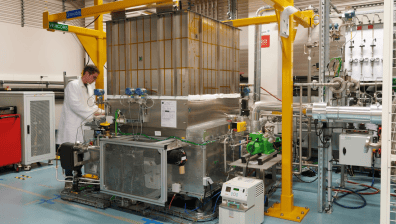
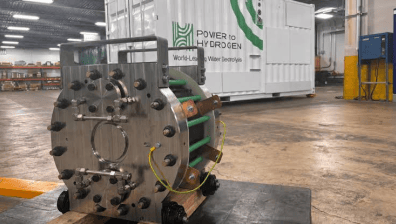
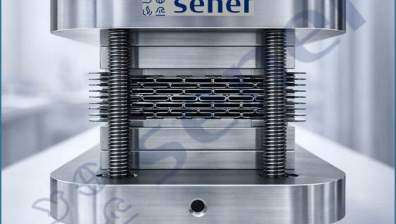
To conduct these experiments, the IRAUNKOR consortium partners are using a wide range of testing infrastructure and equipment relating to electrolytic hydrogen production. The test benches for the three technologies can be monitored continuously and will have different integrated sensors, and project resources include equipment to develop and analyse MEAs (membrane electrode assemblies), the physical and chemical characterisation of materials and components, modelling tools, etc.
Source: Basquenergy Cluster